

How NLP Can Help You Change Limiting Beliefs and Negative Patterns Have you ever stopped and wondered: Why do I think the way I do? Why do I keep telling myself I’m not good enough? Why do I react in the same way, even when I know it isn’t helping me? Why do I lack confidence when there is no obvious reason why I should? Why do I keep repeating the same patterns? One way of looking at this through Neuro-Linguistic Programming (NLP) is to think about the “programming” we develop throughout our lives. When I originally wrote about this subject in 2018, I described it as being programmed by the people and experiences around us. Today, I would describe it slightly differently. From childhood onwards, we are constantly learning. We absorb messages, experiences, behaviours, attitudes and beliefs from our families, teachers, friends, relationships, workplaces and wider environment. And sometimes, without consciously realising it, we can carry those messages with us for years. Where Do Your Beliefs About Yourself Come From? Think about a young child who proudly shows a teacher a picture they have created. They are excited. They are proud. They might be waiting to hear: “Wow! Tell me about your picture.” But instead, imagine they hear: “What is that supposed to be? That’s rubbish.” One comment may seem insignificant to the adult saying it. But what meaning might that child attach to it? Perhaps: “I’m not creative.” “I’m rubbish at art.” “I’m not very good.” “People will laugh at me if I get things wrong.” “It’s safer not to try.” The important part isn’t simply what happened. It is also the meaning we give to what happened. That meaning can influence the story we begin telling ourselves. And when a story is repeated often enough, it can start to feel like the truth. Are Your Limiting Beliefs Really True? How many times have you said something like: “I can’t do that.” “I’m not confident.” “I’ve always been anxious.” “I’m useless with money.” “I’m terrible at speaking in front of people.” “Nobody will listen to me.” “I’m too old to change.” “I’m not clever enough.” “What will people think of me?” But here’s the question I love asking: Who told you? Where did that belief come from? When did you decide it was true? And perhaps more importantly: Is it still true today? This is where NLP coaching can be incredibly useful. What Does “Programming” Mean in NLP? NLP stands for Neuro-Linguistic Programming. Neuro relates to how we experience and process the world through our nervous system and our internal representations. Linguistic relates to language — including the words we use when communicating with other people and the language we repeatedly use inside our own heads. Programming can be thought of as the patterns, habits and responses we have learned and continue to repeat. Think about your brain a little like a sat-nav. A sat-nav follows the route it has been given. But what happens when you realise you’re travelling in the wrong direction? You don’t throw the sat-nav away. You recalculate the route. And perhaps we can do something similar with some of the beliefs and patterns we have picked up throughout our lives. Your Past May Have Influenced You, But It Doesn’t Have to Define Your Future Perhaps someone told you that you weren’t clever enough. Perhaps you were bullied at school. Perhaps you constantly compared yourself with other people. Maybe a parent, teacher, partner, boss or colleague repeatedly criticised you. Perhaps nobody actually said anything directly, but through your experiences you came to your own conclusion: “I’m not good enough.” That belief can then affect how you behave. You might avoid opportunities. You might stay quiet in meetings. You might be terrified of public speaking. You might constantly seek reassurance. You might become a people pleaser. You might worry excessively about what other people think. You might experience anxiety before trying something new. And every time you avoid something, your mind may use that avoidance as further evidence: “See? I knew I couldn’t do it.” The pattern becomes stronger. But patterns can change. Are You Programming Yourself Every Day? There is another person influencing your thoughts who we sometimes forget about. You. Listen to the language you use with yourself. What do you say when you look in the mirror? What do you tell yourself before an important meeting? What goes through your mind before getting on an aeroplane? What do you tell yourself when something goes wrong? Do you say: “I knew I’d mess it up.” Or: “That didn’t go the way I wanted. What can I learn from it?” Those two sentences can create very different emotional responses. The language we repeatedly use matters. If you continually tell yourself: “I’m anxious.” “I can’t cope.” “Something is going to go wrong.” “I’m going to make a fool of myself.” your attention can become increasingly focused on finding evidence that supports those thoughts. NLP can help you begin questioning those patterns instead of automatically accepting them. Changing Limiting Beliefs with NLP As an NLP Coach and Clinical Hypnotherapist, one of the things I help clients explore is the relationship between their thoughts, language, beliefs, emotions and behaviours. Rather than simply saying: “Think positively.” we can become curious about what is happening underneath the problem. Where did this belief come from? What are you telling yourself? What pictures are you creating in your mind? What happens inside you when you think about the situation? What are you focusing on? What would happen if that pattern changed? And what would you rather believe about yourself instead? Using NLP techniques, coaching and, where appropriate, clinical hypnotherapy, we can work towards helping you develop more useful responses and strengthen confidence, self-belief and resilience. Who Are You Surrounding Yourself With? There was one question from my original 2018 article that I still believe is worth asking: Who are you mixing with? Think about the people you spend the most
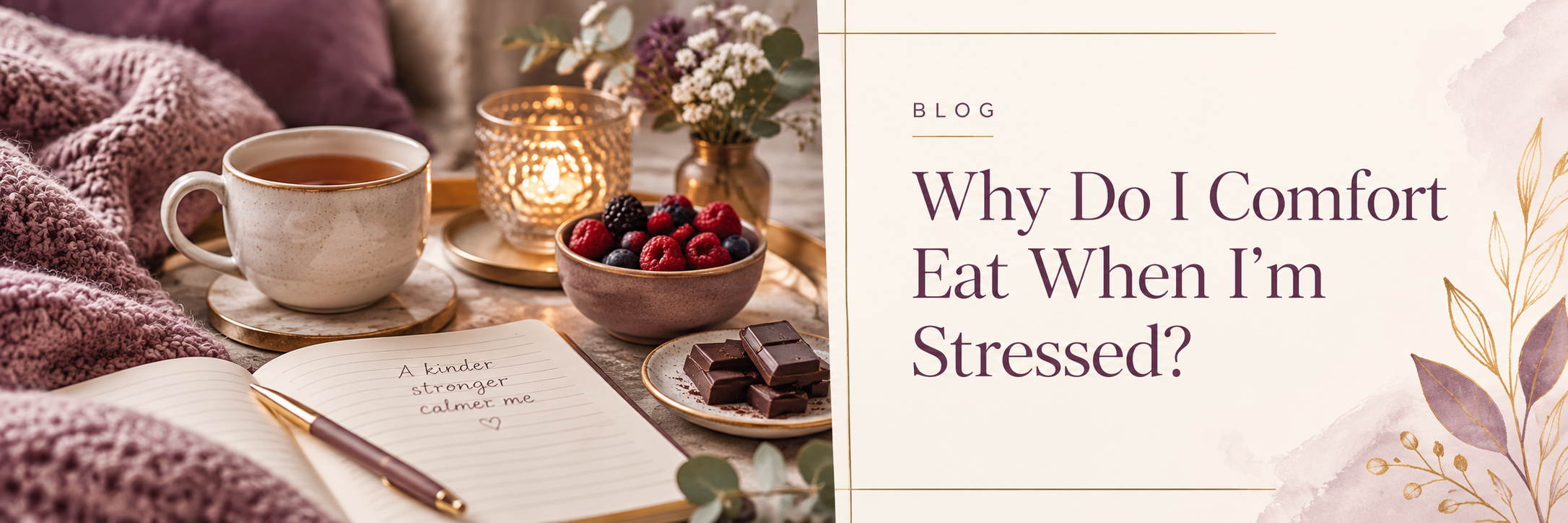
Why Do I Comfort Eat When I’m Stressed?
Understanding Emotional Eating and How to Break the Cycle Have you ever had a stressful day and found yourself reaching for chocolate, biscuits, crisps, cake or another favourite food even though you know you aren’t physically hungry? Perhaps you’ve been busy all day, dealing with work, family, relationships, finances, children, caring responsibilities or simply the pressure of everyday life. You finally get a moment to yourself, sit down and suddenly think: “I need something to eat.” But do you really need food? Or do you need comfort? If you regularly comfort eat when you’re stressed, you may be experiencing what is often described as emotional eating or stress eating. This is when food becomes connected not only with physical hunger, but also with emotions, habits, memories, rewards and the desire to change how you feel. For some people, food can become a way of switching off after a difficult day. For others, eating may temporarily relieve boredom, loneliness, anxiety, frustration, sadness or overwhelm. And this is why telling yourself to simply “have more willpower” may not address the real problem. If stress is triggering your eating, understanding what happens before you reach for the food can be just as important as looking at what you eat. What Is Comfort Eating? Comfort eating is generally used to describe eating because of an emotional need rather than purely because of physical hunger. You might also hear it described as emotional eating or stress eating. There is nothing unusual about enjoying food or occasionally eating something because it makes you feel good. Food is naturally connected with pleasure, family, celebrations, culture and social occasions. It can become more problematic, however, when eating repeatedly becomes one of your main ways of coping with uncomfortable emotions. You may have had a difficult conversation and immediately want chocolate. You may feel lonely in the evening and start looking through the cupboards. You may finish a stressful working day and associate opening a packet of crisps or pouring a drink with finally being able to relax. Eventually, the behaviour can begin to feel automatic. The important question then becomes: “What am I really hungry for?” Perhaps you’re physically hungry. But perhaps you’re hungry for rest, relaxation, reassurance, connection, confidence, distraction, comfort or simply a little time for yourself. Understanding that difference can be an important part of breaking the comfort eating cycle. Please note: I am an NLP Coach and Clinical Hypnotherapist, not a doctor, dietitian or eating-disorder specialist. This article provides general information and should not replace medical or nutritional advice. If you are concerned about your eating behaviour, physical health, mental health or relationship with food, please speak to your GP or another appropriately qualified healthcare professional. Why Do I Comfort Eat When I’m Stressed? Stress doesn’t only affect your thoughts. It can affect your whole body. When you’re experiencing stress, your body’s stress-response systems become more active. Hormones including adrenaline and cortisol are involved in helping the body respond to perceived challenges or threats. Short-term stress can affect people differently, but when stress becomes ongoing, some people notice changes in their appetite, food choices and eating habits. Research has also linked chronic stress with changes in eating behaviour, although individual responses vary considerably. But there is another important element: learning and association. Imagine that every time you’ve had a difficult day for several years, you come home, sit on the sofa and eat chocolate. At first, it may simply be something you enjoy. But gradually your mind can begin making an association between: Stress → Sitting Down → Chocolate → Relaxation The chocolate isn’t actually solving whatever caused your stress. However, the routine itself may have become associated with comfort, reward and the feeling that the day is finally over. Repeat that pattern often enough and it can start to become habitual. You may eventually find yourself reaching for the chocolate almost automatically. This is one of the reasons why stress eating isn’t necessarily just about hunger or willpower. There may be an emotional and behavioural pattern underneath it. Why Does Stress Make Me Want to Eat? When you’ve spent all day coping with demands, making decisions and dealing with other people’s needs, you may reach a point where you feel mentally exhausted. You might think: “I’ve had enough.” “I deserve this.” “I need something nice.” “It’s the only thing I’ve got to look forward to tonight.” Those thoughts are important because they can tell you something about what the food represents. Perhaps it represents reward. Perhaps it means relaxation. Perhaps it is your way of saying, “This is my time now.” Or perhaps eating temporarily distracts you from thoughts or feelings you don’t want to experience. When I work with unwanted habits, I’m interested not only in the behaviour itself, but also in the purpose the behaviour appears to be serving for that individual. Rather than immediately asking: “How do I stop eating chocolate?” I might encourage someone to explore: “What happens immediately before I want the chocolate?” That question can take you much closer to understanding the trigger. The Stress and Emotional Eating Cycle For some people, stress and emotional eating can develop into a repeating cycle. Something stressful happens. You experience an uncomfortable emotion. Your mind remembers that eating a particular food has previously given you pleasure, comfort or distraction. You eat it and temporarily feel better. Then another emotion may appear. Guilt. Disappointment. Frustration. Perhaps you criticise yourself and think: “Why did I do that again?” “I’ve got no willpower.” “I’ve ruined today now.” “I’ll start again on Monday.” That self-criticism can create even more uncomfortable feelings. And what have you previously learned can temporarily relieve uncomfortable feelings? Food. So the cycle begins again. This is why I believe it can be helpful to replace judgement with curiosity. Instead of asking: “What’s wrong with me?” try asking: “What’s happening immediately before I comfort eat?” Emotional Hunger Versus Physical Hunger Understanding the difference between emotional hunger and physical hunger can
How to Stop Emotional Eating
Healthy Ways to Feed Your Emotions Without Food Have you ever opened the fridge when you weren’t actually hungry? Perhaps you’ve had a stressful day, felt lonely, bored, anxious or overwhelmed — and suddenly chocolate, crisps, biscuits, cake or another comfort food seems to be calling your name. But what if it isn’t food you really need? Sometimes, emotional eating isn’t about physical hunger at all. It can be about trying to change how you feel. You may be trying to feed an emotion rather than feed your body. Understanding the difference can be an important step towards changing your relationship with food. What Is Emotional Eating? Emotional eating is when we use food in response to emotions rather than physical hunger. Stress, anxiety, boredom, loneliness, sadness, frustration and even tiredness can all become triggers. You may notice that emotional hunger feels different from physical hunger. It can appear suddenly and create a strong desire for a particular type of food. You might think: “I need chocolate.” “I deserve something nice after the day I’ve had.” “I’ll just have one biscuit.” And before you know it, one biscuit has become several. Afterwards, you may feel disappointed, guilty or frustrated with yourself. This can create a cycle: Emotion → craving → eating → temporary relief → guilt or frustration → more difficult emotions. The important question is not simply: “How do I stop eating?” A more useful question may be: “What am I actually needing right now?” Why Restricting Food May Not Address Emotional Eating Many people try to overcome emotional eating by starting another diet, cutting out certain foods or relying on willpower. That may help some people change what they eat, but if food has become connected with stress, comfort, reward or emotional relief, changing the food alone may not address the underlying pattern. Imagine feeling lonely and reaching for chocolate. Removing the chocolate doesn’t necessarily remove the loneliness. If stress causes you to reach for crisps every evening, telling yourself that crisps are forbidden doesn’t necessarily deal with the stress. This is why I encourage people to become curious about their eating patterns rather than simply judging themselves for them. What is happening before you reach for food? What are you feeling? What are you thinking? What do you actually need? When you begin identifying your emotional eating triggers, you can start finding different ways to respond. If You Are Lonely, Feed the Need for Connection Food can sometimes become a substitute for companionship. If you notice that you eat more when you feel lonely or isolated, ask yourself what could give you genuine connection instead. Could you telephone someone? Meet a friend for coffee? Join a local group? Take up a hobby where you meet other people? Volunteer? Get outside and simply be around other people? For some people, having a pet can provide wonderful companionship, although obviously taking on an animal is a major commitment and needs to suit your circumstances and lifestyle. The important thing is recognising the emotion. If what you’re experiencing is loneliness, food cannot provide the human connection you’re really looking for. If You Are Stressed, Feed the Need for Calm Stress eating is extremely common. After a difficult day, food can become associated with switching off: “I’ve had a terrible day. I deserve this.” There’s nothing wrong with enjoying food. The problem can arise when eating becomes your main strategy for managing stress. Instead, start building other ways of helping yourself unwind. Put on music you love. Go outside for some fresh air. Take a gentle walk. Have a relaxing bath. Practise breathing or relaxation exercises. Write down what’s bothering you. Talk to someone. Dance around the kitchen if that’s what makes you feel good! The aim isn’t to create another list of things you’re “not allowed” to do. It’s about giving your mind more than one way to deal with stress. If You Are Bored, Feed Your Mind Boredom eating can become incredibly automatic. You may be sitting watching television and suddenly find yourself looking through the cupboards. Before automatically eating, ask: “Am I hungry, or am I looking for stimulation?” If you’re bored, change what you’re doing. Read a book you’ve been meaning to start. Watch a film you’ve wanted to see. Do some gardening. Start a craft. Go for a walk. Listen to a podcast. Learn something new. Call someone. Work towards a goal you’ve been putting off. Sometimes we don’t need food. We need something meaningful to engage our attention. If You Are Anxious, Feed the Need for Safety Anxiety can create uncomfortable sensations in the body, and some people discover that eating temporarily distracts them from those feelings. Instead of immediately reaching for food, notice what’s happening. Ask yourself: “What am I anxious about?” Then consider what would help you feel calmer and more in control. It could be slowing your breathing, listening to calming music, getting outside, speaking to someone you trust or using relaxation techniques. This is also an area where approaches such as NLP coaching and clinical hypnotherapy may be helpful for some people in exploring habitual responses to stress and anxiety and developing alternative coping strategies. Slow Down and Become More Mindful Around Food Emotional eating can often happen on autopilot. You may eat while watching television, scrolling through your phone, working or standing in the kitchen. Suddenly the packet is empty and you hardly remember eating it. Try slowing the process down. Where possible, sit down to eat and give the food your attention. Notice the taste, smell and texture. Eat more slowly and give yourself time to recognise when you’re becoming satisfied. If you’ve finished your meal and immediately want more, you could give yourself a little time before deciding whether you’re still physically hungry. The purpose isn’t to create strict rules around food. It’s about bringing awareness and choice back into eating. Ask Yourself: “What Am I Really Hungry For?” This is one of my favourite questions when